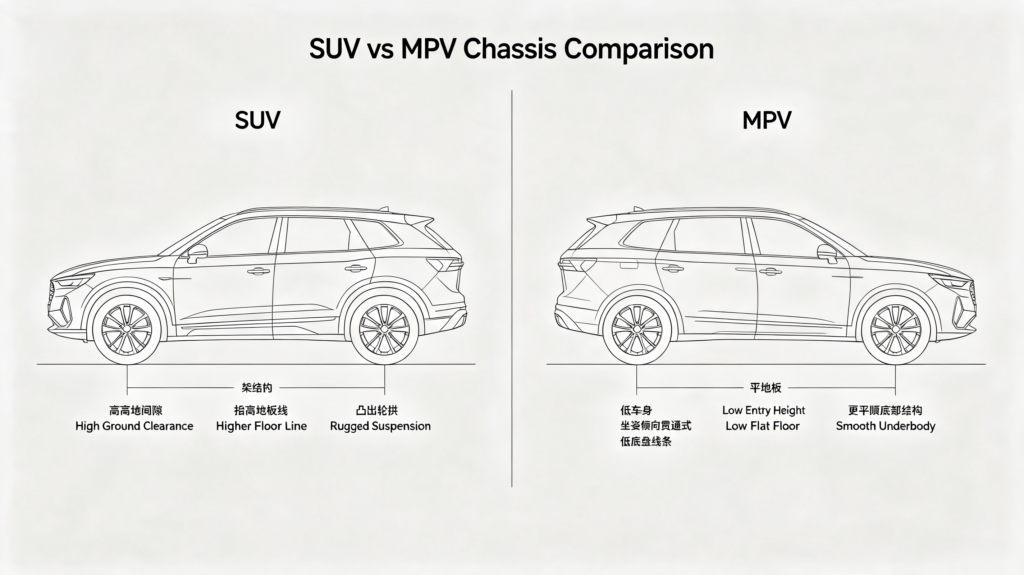
Many buyers look for 7‑seat family vehicles, and they will notice an interesting phenomenon: not all 7‑seat cars are MPVs. A large number of 7‑seat models belong to the SUV category. Both can carry seven passengers, but they are two completely different vehicle forms. Many people mix them up only by seat quantity. In fact, the core distinction lies in chassis structure, body form, driving positioning and application scenarios, not just how many seats are inside.H2 What Defines an SUV and an MPV
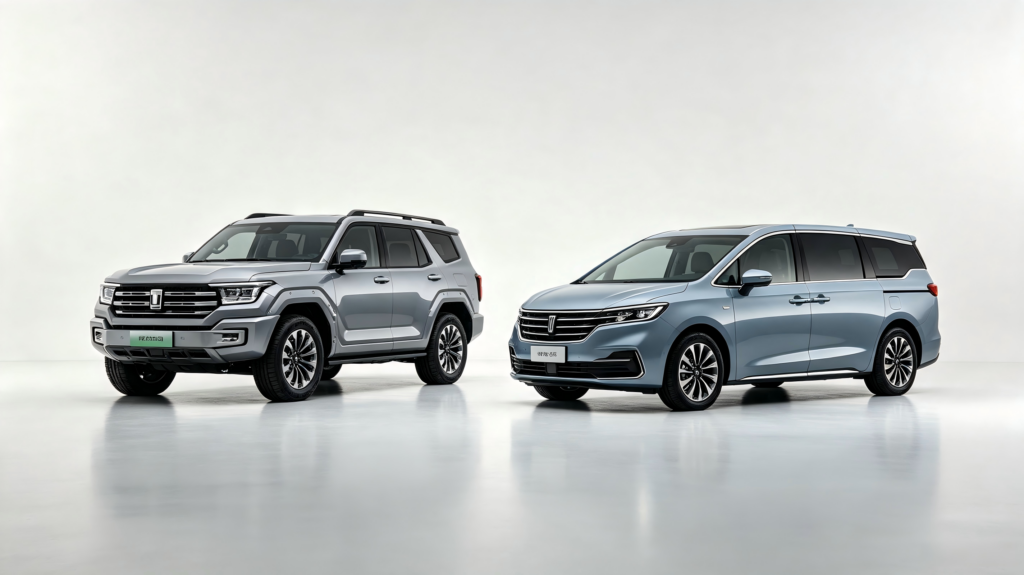
What Defines an SUV and an MPV
SUV stands for Sport Utility Vehicle. Its original design goal is to combine road driving performance with certain off‑road capability. Most 7‑seat SUVs inherit the SUV‑specific chassis architecture. Whether unibody or body‑on‑frame construction, the vehicle has higher ground clearance, upright body posture, and typical SUV front‑engine layout.
MPV means Multi‑Purpose Vehicle. It is built purely for passenger‑carrying. MPV adopts a low‑floor, box‑shaped passenger‑oriented chassis. The core design priority is cabin space, passenger comfort and multi‑person riding experience.
Core Differences: Why 7‑Seat SUV Is Not MPV
1. Chassis & Platform Basis
7‑seat SUV is developed from SUV platform. The floor is higher, because of the higher chassis, suspension and underbody structure. The third‑row seats are often placed above the rear suspension structure. This leads to higher third‑row seating position, and legroom may be limited.
MPV uses a dedicated MPV platform. The floor is designed to be as low and flat as possible. Suspension components are arranged to avoid occupying cabin space. The third row gets more leg and foot space by default.
2. Body Shape & Exterior Design
7‑seat SUV keeps SUV styling features: sloped rear window, higher hood, upright front face, SUV‑style wheel arches. The roofline slopes backward for sport‑looking appearance.
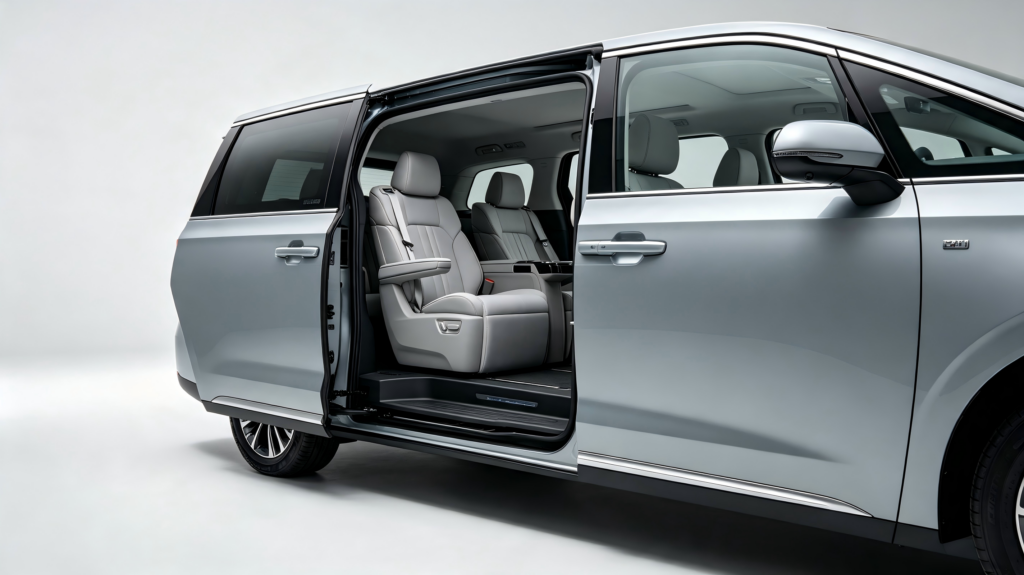
MPV has a boxy, square‑shaped body. The roof stays flat all the way to the rear, maximizing interior height. Large sliding side doors are a typical MPV feature. Most 7‑seat SUVs use regular swing‑out doors instead of sliding doors.
3. Driving Experience & Capability
7‑seat SUV retains SUV driving attributes. It has higher ground clearance for bad roads or light off‑road conditions. Steering and chassis tuning lean toward SUV‑style handling. Body roll will be more obvious when fully loaded with seven people.
MPV is tuned for comfortable city and highway cruising. Ground clearance is relatively low, not built for off‑road. The chassis focuses on filtering road bumps for passenger comfort, not crossing rough terrain.
4. Space Performance of Third Row
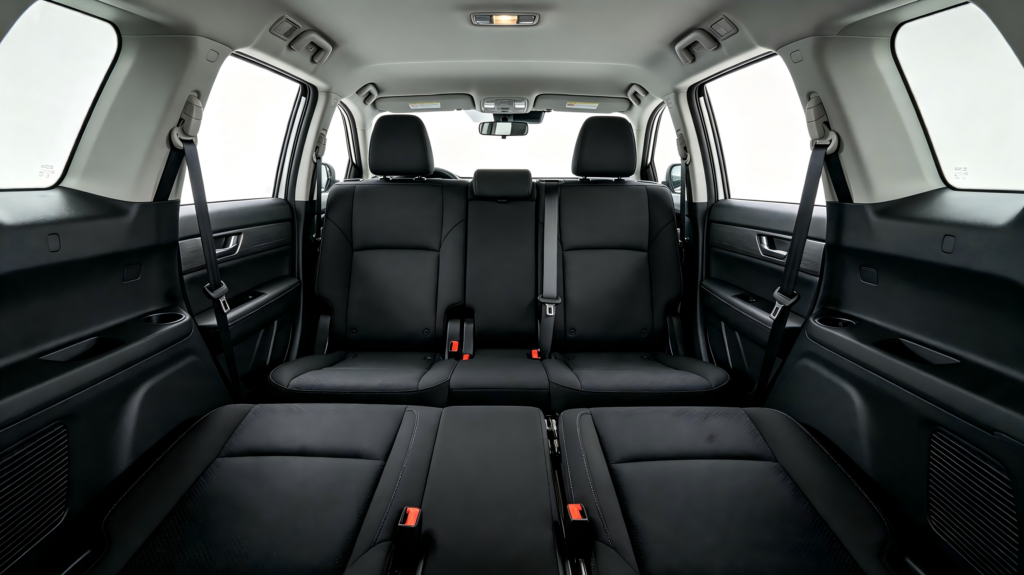
Most 7‑seat SUV third row is emergency‑oriented, more suitable for children or short‑distance trips for adults. When the third row is in use, the remaining trunk volume is often small.
MPV’s third row is designed for long‑distance adult rides. Even with the third row unfolded, it can still reserve usable luggage space.
Suitable Crowd for 7‑Seat SUV and MPV
Choose 7‑seat SUV if you:
- Need 7 seats occasionally, mostly drive with 4‑5 passengers
- Want higher ground clearance for complex road conditions
- Prefer SUV appearance, also need certain trunk space when third row is folded down
- Hope one car can balance family travel and outdoor driving
Choose MPV if you:
- Frequently take 6‑7 people for long trips
- Put top priority on second‑row and third‑row passenger comfort
- Mainly drive on city and highway paved roads
Seat quantity cannot decide whether a car is SUV or MPV. The fundamental judgment standard is the original platform, chassis structure, body form and product positioning. Many automakers add third‑row seats on mature SUV platforms to create 7‑seat SUV models, meeting consumers’ occasional 7‑seat demand without developing a brand‑new MPV platform.
If you only need 7‑seat function occasionally, a 7‑seat SUV is cost‑effective. If frequent full‑load seven‑person comfortable travel is your core demand, MPV will be the better solution.