
On sweltering summer open‑air parking lots, ground temperatures can surge above 50℃, pushing cabin interior temperatures as high as 70℃. Steering wheels and seats burn to the touch, and the first gust of air from the air‑conditioner carries plastic odors — this is the real‑world summer experience for many car owners.
Yet imagine driving this same vehicle into sand‑blown gobi deserts, climbing dunes, fording shallow waters, and carrying an entire family across thousands of kilometers. Under these conditions, concerns go far beyond mere comfort. Fast‑acting air‑conditioning matters for physical well‑being; durable interior and rubber components preserve long‑term vehicle condition. Features such as underbody skid plates, ground clearance and wading depth may look superfluous in urban traffic, yet out in remote wilderness, they can mean the difference between returning home safely or not.
The Fangchengbao Leopard 5 is a hybrid hardcore SUV that bridges daily family commuting and extreme wilderness travel. This article avoids dry parameter lists and addresses one core question: are its rugged‑looking features mere gimmicks for recreation, or genuine survival‑grade necessities?
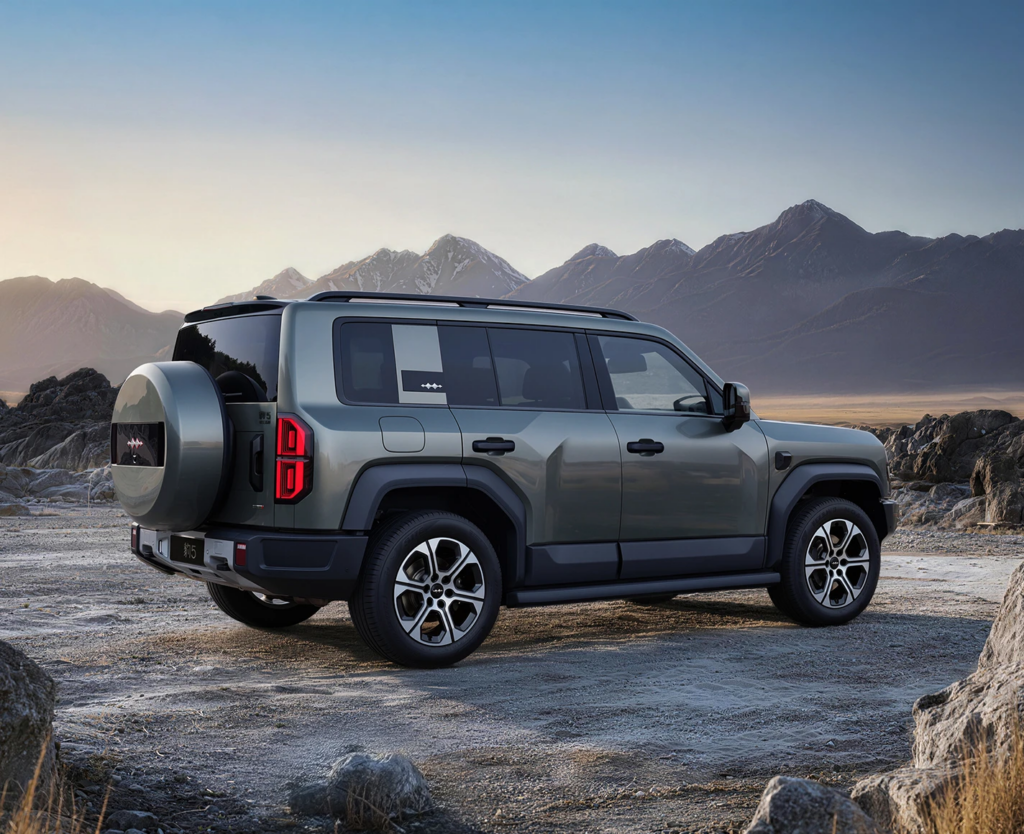
01 The 50℃ Heat Test: Air‑Conditioning, Interior Trim and Rubber Components — What Truly Holds Up
Intense solar exposure delivers an impartial stress test for any automobile. No matter the brand or price tag, hours parked at 50℃ open‑air conditions expose the real weather‑resistance limits of every material.
Air‑Conditioning Performance: More Than Comfort — A Health Concern
The Leopard 5 is fitted with an electric‑drive compressor, enabling high‑power cooling under pure‑electric operation without starting the combustion engine. After severe heat‑soaking, the air‑conditioner can run at full load to bring cabin temperatures down from above 70℃.
This capability is about more than staying cool. Inside a sealed overheated cabin, occupants’ core body temperatures rise rapidly, posing tangible health risks for the elderly, children and people with weaker physical conditions. Faster cooling shortens this hazardous exposure window.
Important caveats: cooling output of the electric‑driven AC is constrained by battery state‑of‑charge and ambient temperature. Under extreme heat with low battery charge, cooling power may be limited. Furthermore, the panoramic sky‑roof permits significant radiant heat penetration. Even with effective air‑conditioning, occupants still feel noticeable thermal radiation around the head area compared with conventional metal roofs.
Interior Aging: Ultraviolet Radiation Is the Hidden Culprit
Most drivers blame high temperatures for interior degradation, yet ultraviolet radiation is the primary culprit. Prolonged UV exposure fades, hardens and cracks dashboards, faux‑leather seats and plastic trims, while increasing volatile organic compound emissions.
While the Leopard 5 uses weather‑resistant interior materials, it is not immune to sun damage. Vehicles parked outdoors age twice as fast as those kept in underground garages, regardless of manufacturer. Sunshades are not luxuries but low‑cost tools to slow interior deterioration.
Special attention should be paid to the central infotainment screen. High heat accelerates degradation of its backlight and touch layers. After hot‑soaking, open windows for ventilation before engaging air‑conditioning; avoid setting screen brightness to maximum immediately upon entry.
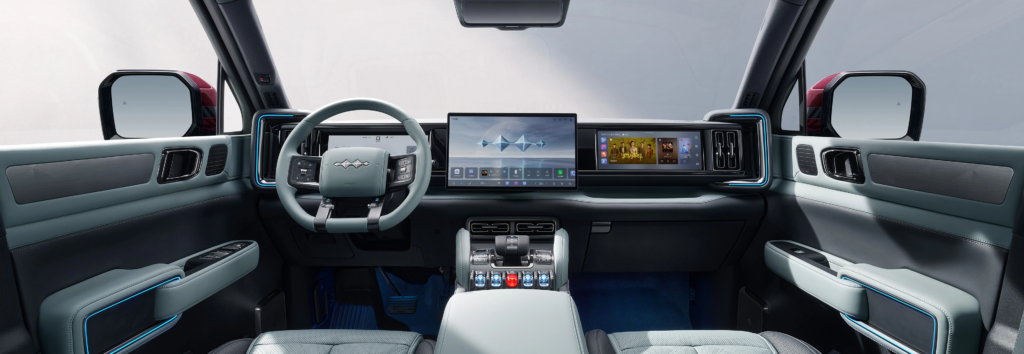
Rubber Components: Easily‑Overlooked Wear‑and‑Tear Items
Door seals, sunroof gaskets, rubber hoses and tires gradually lose elasticity, harden and crack under sustained 50℃‑plus heat. Consequences include air leaks, dust ingress, degraded sealing performance and abnormal rattling noises.
Factory‑fitted rubber parts on the Leopard 5 pass weather‑resistance validation, yet frequent outdoor exposure still shortens service life. Hard‑SUV owners should perform periodic inspections: check whether door seals fit tightly, look for cracked chassis rubber bushings, and spot fine cracks on tire sidewalls. These are low‑cost maintenance tasks; neglect may lead to expensive failures.
02 Sandstorms, High‑Speed Cruising and Dunes: Real‑World Battlefields for a Hardcore SUV
If high‑temperature parking represents passive endurance testing, sand, highway travel and desert dunes constitute active operating challenges where the Leopard 5’s strengths truly emerge.
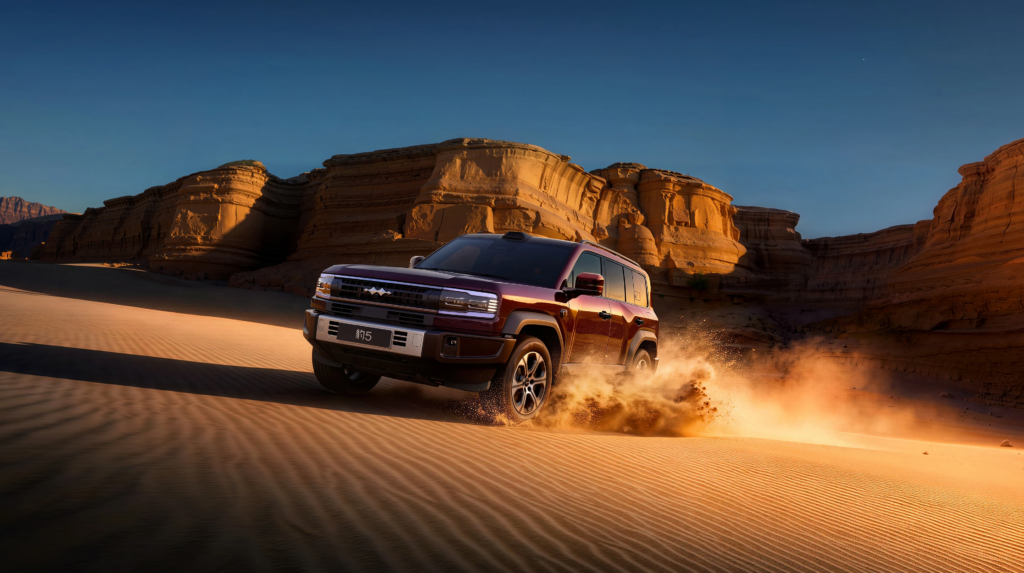
Long‑Distance Highway Travel: Can a Nearly‑Three‑Ton Vehicle Stay Stable?
Weighing close to three metric tons, the Leopard 5 is a liability in city traffic yet an advantage on highways — greater curb weight delivers solid road‑holding and stability. Its DMO hybrid system enables coordinated gasoline‑electric operation. With a full tank and fully charged battery, NEDC combined driving range reaches 1200 km, cutting down refueling stops for long‑haul family trips.
Higher‑spec Yunlian‑P variants automatically lower ride height at speed to reduce center‑of‑gravity, further boosting high‑speed stability. Not exotic black‑box technology, yet for a box‑shaped SUV standing nearly 1.92 m tall, reduced body height noticeably improves wind noise suppression and driving stability.
That said, hardcore SUVs inherently consume more energy than city‑oriented crossovers, and the Leopard 5 is no exception. At 120 km/h cruising speed, wind and tire noise are more pronounced than for similarly‑priced monocoque‑body SUVs. This stems from body‑on‑frame architecture and boxy aerodynamics: a deliberate trade‑off rather than a defect.
Sandy‑Dust Environments: Sealing and Underbody Protection Are Key
Fine desert sand penetrates every gap: air‑filter intakes, door perimeters, chassis crevices and radiator fins. Poor sealing causes abrasive particle buildup and component clogging.
Factory underbody skid plates comprehensively shield the battery pack and core powertrain assemblies, mitigating stone impacts and limiting sand intrusion into chassis components. Sealing systems are optimized for unpaved conditions. Still, stock configuration lacks dedicated desert‑proof sealing modifications. After heavy desert traversal, owners must clean air filters, inspect rubber seals and flush cooling radiators to prevent abrasive residual sand from wearing mechanical parts.
A critical reality: “durability” for off‑road vehicles does not mean zero‑maintenance. Even the most robust vehicle suffers damage if desert sand is left uncleaned.
Desert Sand Driving: Electric 4WD Lowers Off‑Road Barriers
Desert dune operation is one of the Leopard 5’s core competencies. DMO electric four‑wheel‑drive paired with intelligent triple locks (front differential lock, rear differential lock and energy‑based central lock) distributes torque at millisecond response rates, outperforming traditional mechanical 4WD systems. Sand mode calibrates power delivery and traction control automatically, substantially lowering the learning curve for dune driving and self‑recovery from being stuck.
Yunlian‑P versions offer 140 mm adjustable suspension travel, raising ground clearance from 220 mm up to 310 mm. For reference, typical urban crossovers offer 150‑180 mm ground clearance, while the Tank 300 achieves 224 mm. At maximum lift, the Leopard 5 approaches ground‑clearance figures of professionally modified off‑road vehicles.
Additional off‑road aids include the Leopard‑Turn function delivering a 5.8‑meter minimum turning radius, useful for desert U‑turns and narrow‑path maneuvering. Low‑speed crawl mode maintains steady velocity so novice drivers navigate rough terrain without frequent accelerator‑brake modulation.
Important caveat: electronic assistance systems reduce off‑road difficulty but cannot replace driver judgment. Tire‑pressure adjustment, route selection and dune‑climb angle assessment remain human decisions. Electronics provide a safety net, not autonomous off‑road capability.
03 Wading, Skid Plates and Ground Clearance: Comfort Convenience or Survival‑Grade Requirement?
This forms the article’s central argument. Many buyers regard ground clearance, skid plates and wading depth as features they “will never use”. However, “rarely needed” differs fundamentally from “absent”.
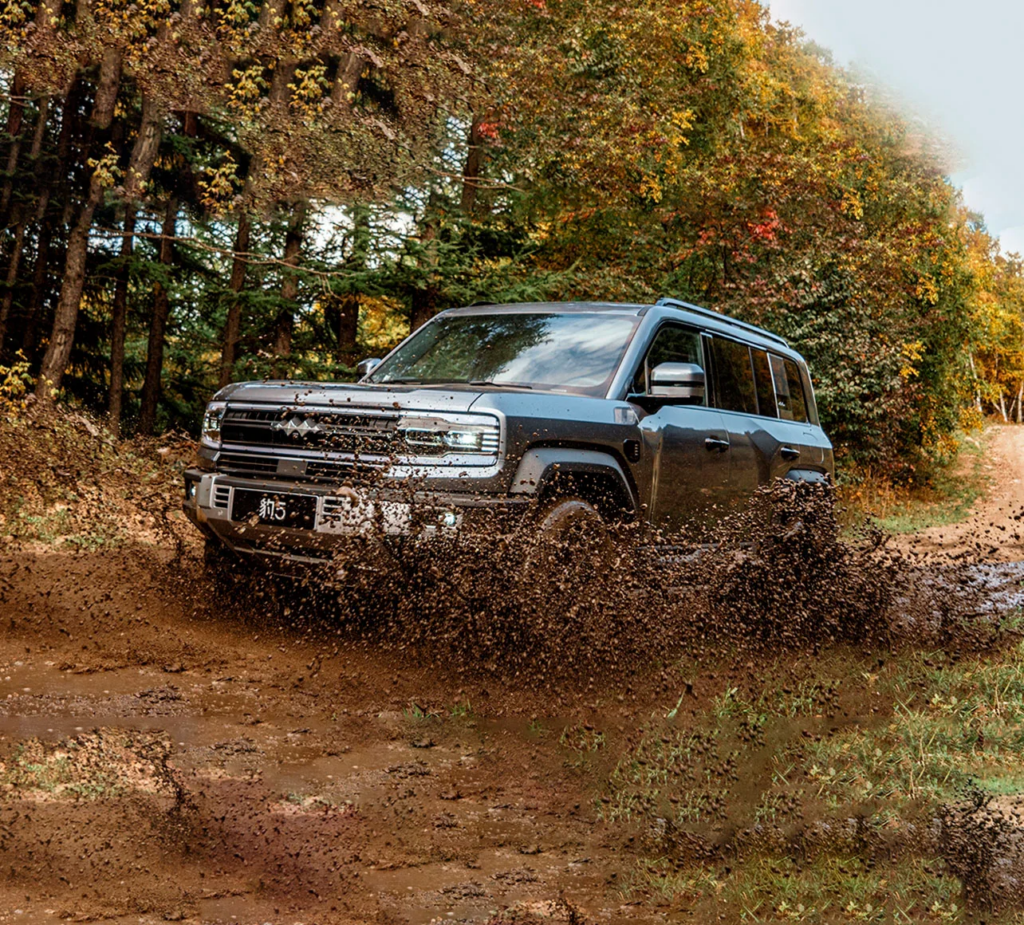
Wading Capability: What Does 790 mm Mean in Practice?
Standard‑trim Leopard 5 achieves 700 mm maximum wading depth; Yunlian‑P variants reach 790 mm at maximum suspension height. By comparison, ordinary city‑SUV wading depth averages 300‑400 mm, while most passenger sedans stay under 300 mm.
790 mm roughly corresponds to an adult’s upper‑thigh height, sufficient for most urban floodwater, shallow‑river crossings and off‑road puddles. Factory‑fitted wading‑depth sensors give real‑time water‑level alerts to the driver.
Nevertheless, wading capability is not full submersion‑proofing. Exceeding rated depth or restarting after engine‑submersion will cause engine water‑ingress and electrical short‑circuit damage. Hard‑SUV wading ratings define permissible crossing limits, not failure‑proof guarantees.
Underbody Skid Plates: Protecting Your Most Expensive Component
Skid plates fully cover the battery pack and key powertrain hardware. Bottoming‑out and rock impacts are commonplace off‑road. A robust skid‑plate assembly can save tens‑of‑thousands‑worth of battery‑repair costs in a single off‑road outing.
This is especially vital for electric‑hardcore SUVs. The battery pack represents the single‑costliest vehicle component; impact damage triggers extremely expensive repairs. Skid plates are not cosmetic off‑road decoration, but primary physical defense for the battery.
Ground Clearance: The Fundamentals of Mobility
Standard‑spec Leopard 5 delivers 220 mm ground clearance, a 35° approach angle and 32° departure angle — competitive figures for factory‑stock vehicles. At maximum Yunlian‑P lift (310 mm), ramp‑breakover angle improves to handle severe cross‑axle articulation and hump obstacles.
Ground clearance matters not only for clearing tall obstacles but also for avoiding bottoming‑out. Bottoming‑out on sand, gravel or rutted tracks risks chassis damage and immobilization. In remote gobi regions, getting stuck can mean hours‑long waits for rescue or overnight exposure hazards.
Core Conclusion: From Leisure Amenity to Survival‑Grade Necessity
So are these specs comfort features or survival‑grade necessities? Answer: it depends on where you drive.
Within city limits, 220 mm versus 150 mm ground clearance mostly affects curb‑climbing ease; skid‑plates may go unused for years; 700 mm wading depth versus 400 mm only matters during heavy rainstorms.
Once you venture into desert hinterlands, remote gobi or rough mountain tracks, the nature of these features transforms. Bottoming‑out may destroy the battery; getting stuck may entail prolonged rescue delays; improper water‑crossing can total the vehicle. In such contexts, underbody protection, ground clearance, locking four‑wheel‑drive and wading capacity shift from recreational add‑ons to survival‑grade safeguards.
You do not need to desert‑drive every weekend. The value lies in built‑in fallback capability when you take your family far from urban infrastructure. The core value of hard‑off‑road SUVs is not “how wild you can go”, but “being able to return safely after you get there”.
04 Family Practicality, Resale Value and Social Attributes: Real‑World Merits of a Hardcore SUV
Off‑road performance constitutes only part of the Leopard 5’s identity. For most owners, it functions first as a family car, second as an off‑road machine.
Multi‑Passenger Family Travel: Can a Hardcore SUV Serve Household Needs?
Classified as a five‑seat mid‑size SUV with 2800 mm wheelbase and 4890 mm overall length, the Leopard 5 offers generous space for five occupants plus ample trunk volume for luggage and camping gear.
Traditional body‑on‑frame off‑road vehicles suffer well‑known family‑use drawbacks: high noise, thirsty fuel consumption, spartan interiors and stiff ride quality. The DMO hybrid architecture mitigates fuel‑use and noise drawbacks. Amenities including ventilated‑heated‑massage seats, on‑board refrigerator and vehicle‑to‑load external power output elevate family‑trip comfort. Drivers can commute purely electric and take long‑distance trips in hybrid mode.
Limitations exist: five‑seat layout cannot accommodate households of six or more passengers (the larger Leopard 8 with third‑row seating serves that segment). Due to body‑on‑frame construction, ride quality over speed‑bumps and rough roads remains firmer than monocoque‑chassis city‑SUVs, an inherent structural trade‑off.
Residual Value: Depreciation Logic for Hybrid Hardcore SUVs
Resale value draws considerable buyer attention. According to the 2026 China Automobile Dealers Association & Jingzhengu residual‑value report, one‑year retention rate for the Leopard 5 stands at roughly 74.24 %, ranking high among plug‑in hybrid models; market ranges cite 74.9 %‑77.1 % for one‑year retention and approximately 59.3 % after three years.
These figures place it among top‑tier hybrid hardcore SUVs, outperforming most pure‑electric models yet trailing iconic gasoline off‑roaders such as the Jeep Wrangler and Toyota Prado.
Historical context: official price cuts of RMB 50 000 in July 2025 depressed early‑unit resale values and created short‑term market turbulence. That shock has largely been absorbed, and second‑hand market conditions have stabilized. Yunlian‑P high‑trim examples consistently hold better residual value than base‑spec variants.
Accelerated technical iteration creates depreciation pressure across the new‑energy sector, not unique to the Leopard 5. If you plan to keep your vehicle five‑plus years, depreciation impact diminishes. For users likely to trade‑in within three years, higher‑spec configurations deliver more stable residual performance.
Social Attributes: Box‑Shape Styling Builds Conversation Value
Distinctive box‑shaped mecha‑inspired styling gives the Leopard 5 high visual recognition in city streets, camping gatherings and off‑road convoys.
Social value extends beyond aesthetics. Hard‑off‑road culture forms a community connecting urban family adventurers, off‑road enthusiasts and camping lovers. Positioned at the intersection of daily usability and wilderness capability, the Leopard 5 suits school‑run commutes as well as desert group expeditions.
This dual‑identity brings more conversational appeal than pure‑city crossovers while feeling more approachable than dedicated off‑road machines.
Closing Thoughts: A Vehicle of Contradictions Yet Coherent Purpose
The Fangchengbao Leopard 5 balances contradictory requirements.
It endures 50 ℃ heat testing for air‑conditioning efficiency, interior durability and rubber‑component aging. In sandy‑desert and wading scenarios, skid‑plates, ground‑clearance and locking four‑wheel‑drive separate recreational extras from survival‑grade fallback systems. It delivers comfortable family transport while granting access to off‑road social circles.
Flaws remain: noticeable radiant heat via the panoramic roof, mandatory post‑desert maintenance routines, and typical new‑energy‑vehicle depreciation volatility.
Still, it delivers a compelling domestic‑hard‑SUV proposition: rugged off‑road capability need not come at the cost of daily‑life comfort, and family‑oriented SUVs can carry genuine wilderness‑survival reserves.
If 90 % of your driving happens in cities yet you occasionally wish to take family far beyond pavement; if you refuse to endure daily discomfort just for occasional off‑road trips; if you understand “features you may never need must still work when required” — the Leopard 5 represents one of the best‑balanced choices in its price bracket.
The ultimate meaning of a hardcore SUV is never “how extreme terrain you can conquer”. It is the confidence that no matter where you go, you can make your way safely back home.