
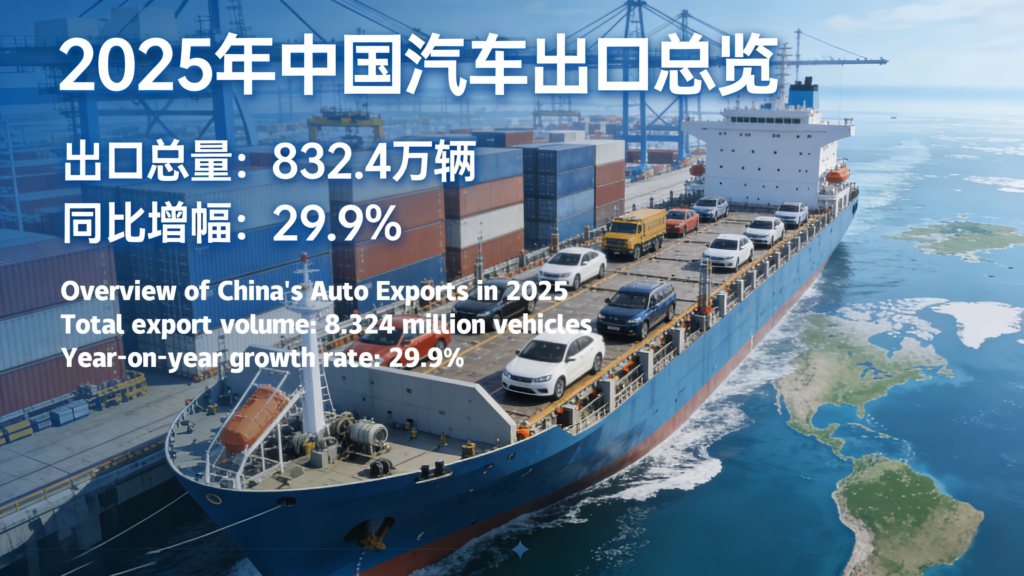
In recent years, China’s auto exports have stepped into the global first echelon, making it a key choice for overseas auto purchasers seeking reliable Chinese auto sources. According to data from the General Administration of Customs and the China Association of Automobile Manufacturers (CAAM), China’s total auto vehicle exports reached 8.324 million in 2025, a year-on-year increase of 29.9%. Notably, the export pattern has undergone a crucial transformation—shifting from full dominance by fuel vehicles to a new phase of “coordinated development of fuel and new energy vehicles”, driven by China’s 2026 new energy vehicle export license policy and the “Energy Conservation and New Energy Vehicle Technology Roadmap 3.0”. This article analyzes the core changes between these two types of vehicles, providing practical references for your overseas procurement and market layout.
Over the past decade, fuel vehicles have long accounted for more than 90% of China’s auto exports. Leveraging their cost-effectiveness and the advantages of commercial vehicles (mainly trucks), they supported China’s auto exports from the initial stage to large-scale expansion, with commercial vehicles serving as the absolute mainstay in the early days. Meanwhile, new energy vehicles were in the exploratory stage, accounting for less than 10% of total exports, with slow growth and limited market coverage, only acting as a niche supplement for a few regions.
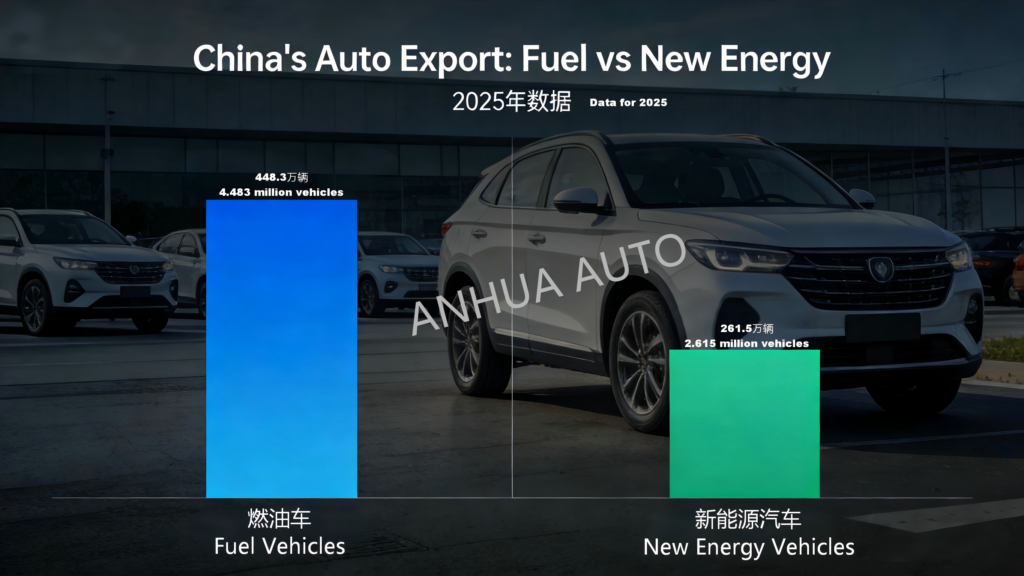
Currently, the export patterns of these two vehicle types show distinct differences in scale and proportion—key information for overseas purchasers. In 2025, fuel vehicle exports reached 4.483 million units, a year-on-year decrease of 2%, accounting for approximately 43% of total new car exports. While they remain at a high volume, their growth rate is under mild pressure. In sharp contrast, new energy vehicle exports surged by 103.7% year-on-year to 2.615 million units, accounting for 36.8% of total new car exports, with an average export price of $29,800—83.5% higher than that of fuel vehicles. Undoubtedly, new energy vehicles have become the core growth engine of China’s auto exports.
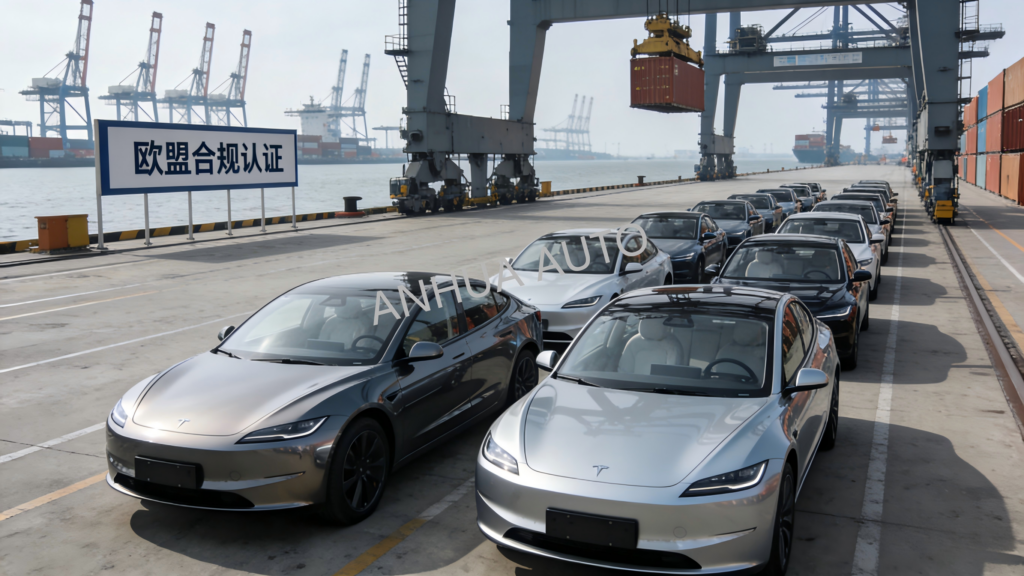
The differences are even more prominent in market distribution and compliance—two critical factors affecting your procurement decisions. Fuel vehicles still focus on underdeveloped regions such as Southeast Asia, the Middle East, and Latin America, with Mexico emerging as a new key market. They mainly cover commercial pickup trucks and light buses, which are less affected by global carbon policies and adaptable to lower market access standards. As for new energy vehicles, they have successfully entered developed markets like Europe and North America while consolidating their presence in the Middle East and Southeast Asia. However, they face strict compliance requirements, including the EU Euro 7 standard and CBAM carbon tariff. Additionally, China implemented exclusive export license management for new energy passenger vehicles in 2026, which is closely linked to after-sales service capabilities—ensuring more reliable support for your purchases.
Two core factors drive this pattern change, which directly influences your long-term procurement planning: policy and technology. Domestically, China’s “coordinated development of fuel and new energy vehicles” strategy and the 2026 new energy vehicle export compliance policy have standardized the export order, eliminating the chaos of extensive exports and ensuring more stable vehicle sources for you. Globally, the carbon neutrality goal and various low-carbon policies have accelerated the shift toward cleaner vehicles. Technically, breakthroughs in battery and intelligent technologies for new energy vehicles, along with the upgrading of hybrid technology for fuel vehicles, have enhanced their competitiveness and adaptability to overseas markets.
In the short term (3-5 years), China’s auto exports will maintain the coordinated development of fuel and new energy vehicles: new energy vehicles will continue to lead growth, while fuel vehicles will maintain a stable stock. For overseas purchasers and foreign trade practitioners, we summarize three key practical inspirations to support your procurement:
First, balance your vehicle sources by selecting compliant new energy vehicles and hybrid/commercial fuel vehicles to meet diverse market demands.
Second, align your market layout—focus on developed markets for new energy vehicles and underdeveloped regions for fuel vehicles to maximize market potential.
Third, closely monitor the compliance policies of your target markets and China’s export new policies to effectively control procurement risks.