
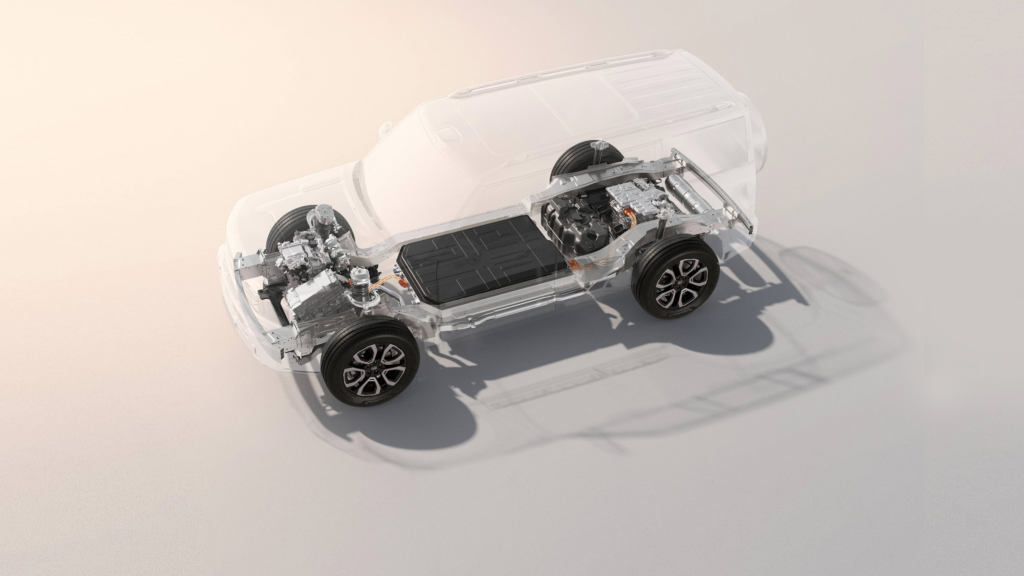
Many overlanding veterans share a consensus: traditional hardcore off-road vehicles excel on rough terrain yet suffer high fuel consumption during long highway trips. New energy SUVs deliver quiet and economical rides, but most are vulnerable to undercarriage damage, overheating and failure under intense off-road conditions. Built with the GTA integrated body-on-frame architecture and Raytheon EM-T off-road hybrid system, the Geely Galaxy Cruiser 700 is engineered to solve major pain points of long-distance overlanding across plateaus, deserts, water crossings and extended unpaved tracks. This review focuses on real-world driving scenarios rather than just paper specifications, covering its performance on complex terrain, strengths and limitations.

Long-distance Overlanding: Range and Chassis Durability as the Foundation
The biggest challenge of cross-country overlanding is not a single steep slope, but vehicle reliability over thousands of continuous kilometers. The vehicle must maintain stability on paved highways, winding mountain dirt roads and hundreds of kilometers of gravel tracks, while coping with limited refueling and charging access.
The Galaxy Cruiser 700 adopts the GTA native integrated body-on-frame structure with an embedded hidden roll cage. Its torsional rigidity reaches 44,000 N·m/deg. On long corrugated washboard roads, body rigidity is severely tested. Many unibody SUVs develop obvious stress deformation after hours of continuous rough driving, accompanied by misaligned doors and severe interior squeaks. During hundreds of kilometers of Gobi washboard road tests, this vehicle showed no structural distortion. The rear tailgate still opens and closes smoothly even under articulation on cross-axle terrain, which is the core benefit of the body-on-frame design.
Suspension quality determines comfort on long trips. It uses front aluminum double wishbone and rear five-link suspension. Higher trims are fitted with dual-chamber air suspension plus CCD preview adaptive damping. Drivers can raise the air suspension for better ground clearance off-road, or lower it on highways to reduce wind resistance and improve stability. The magic carpet damping pre-scans road surfaces to absorb bumps and undulations. Compared with conventional body-on-frame off-roaders that induce constant swaying, it greatly reduces passenger fatigue on long journeys.
For the 2.0T EM-T three-motor variant, the combined range reaches up to 1,770 km on a full tank and full battery. Paired with an 80L fuel tank and a 47.14 kWh CATL battery pack, it removes range anxiety on remote routes with sparse charging infrastructure. Even in charge-depleting mode, the powertrain delivers steady power output with fuel consumption around 5L/100km, cutting the high fuel cost of large-displacement traditional off-road vehicles. The 6C high-voltage fast charging enables charging from 10% to 80% in roughly 10 minutes for quick energy top-ups at rare charging stations along remote routes.
Safety and communication are often overlooked for overlanding. High-spec versions support satellite communication to send distress signals in signal-blind no-service zones such as remote Gobi and highland areas. The 540° transparent chassis camera helps avoid rocks and underbody strikes to the battery pack. The roof rack has a static load rating of 300kg, capable of carrying roof tents, fuel cans and recovery gear for overlanding.
Desert Performance: Sand Dune Climbing and Continuous Heavy-load Operation
Desert off-roading differs greatly from regular mountain trails. Loose sand creates high rolling resistance; vehicles tend to get stuck when starting. Sustained high torque demand may trigger thermal protection and power derating on many models after repeated dune climbing. Short burst sand runs may look impressive, but prolonged hard climbing can overheat the electric drivetrain or transmission and cut power.
The Galaxy Cruiser 700 is equipped with a three-motor AWD system, featuring independent rear dual P4 motors. Wheel torque distribution adjusts in milliseconds, together with a mechanical rear differential lock. Once Desert Mode is activated, the powertrain recalibrates power delivery. Unlike fuel vehicles where minor throttle mismanagement digs the car deeper into sand, the system prevents excessive wheel spin. In fully-loaded factory stock condition, it can complete straight climbs on tough dunes. The motors deliver instant high torque to maintain traction and reduce slippage.
It is worth noting that desert capability cannot be judged solely by peak horsepower. Extended desert driving quickly raises temperatures in the engine bay and electric drive units. This model uses a dual cooling system for the electric drivetrain to suppress thermal derating and reduce unexpected power cut-offs during intensive sand driving. In factory specification, it offers 233mm minimum ground clearance, a 30° approach angle and 31° departure angle, minimizing scraping risks to front and rear bumpers when ascending and descending dunes.
That said, the vehicle still has operational limits in desert terrain. Standard desert driving rules still apply: reduce tire pressure and maintain momentum. Even smart electronic controls cannot prevent bogging if you aggressively spin the wheels in one spot. This vehicle lowers the entry barrier for desert driving. Novice drivers can rely on Desert Mode for easier control, while experienced off-roaders can engage the rear differential lock for demanding sand pits.
Water Crossing: Regular Fording and Emergency Flotation
Seasonal river crossings and post-rain puddles are common hazards on overlanding routes and a leading cause of off-road accidents. Most new energy SUVs suffer poor water resistance; high water levels can damage battery and electronic control units.
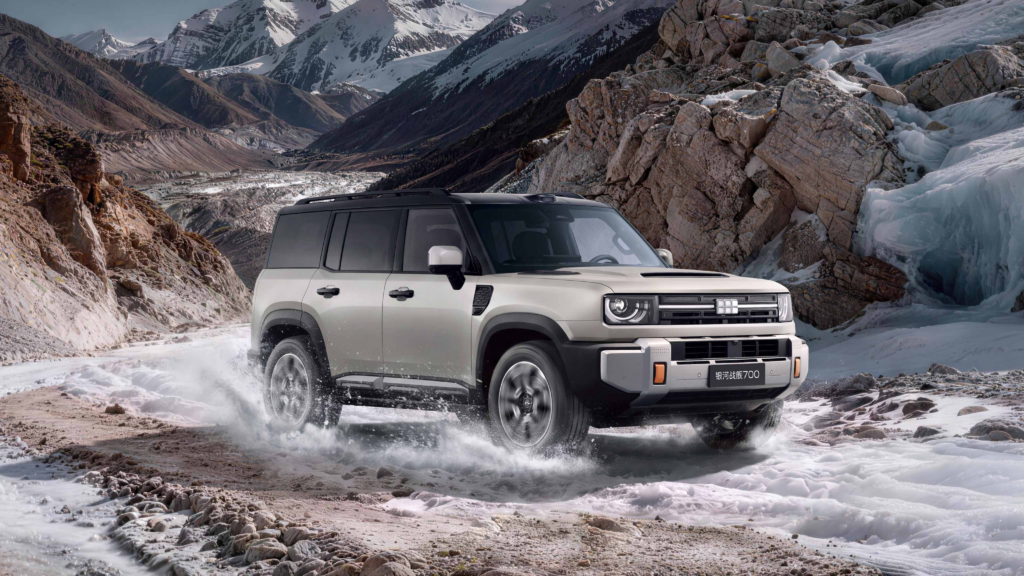
The Galaxy Cruiser 700 has a rated maximum fording depth of 800mm. Its electric components meet IPX8 waterproof rating. An onboard sonar system monitors water depth and underwater obstacles, projecting underwater terrain onto the infotainment screen to avoid submerged rocks or depressions that could damage the underbody battery pack. For routine river crossing within the 800mm limit, steady low-speed passage protects batteries and electronics.
Its unique emergency flotation function serves as an extreme safety backup, not designed for long-distance sailing. When water exceeds the rated fording depth and conditions permit, flotation mode can be activated, allowing low-speed movement and steering in still water for up to 40 minutes via dual thrusters. This feature is intended for emergency escape during flash floods or unexpected deep submersion, buying time for occupants to evacuate. It is not recommended for active deep-water cruising.
The battery pack adopts recessed protection and polyurea coating. Compared with ordinary new energy SUVs, it delivers better resistance to punctures from rocks when crossing rocky riverbeds. Nevertheless, follow standard fording rules: move slowly, avoid large waves hitting the front fascia, and inspect brake performance immediately after exiting water.
Highland Performance: Power Delivery and Drivetrain Stability at High Altitudes
Thin air is the biggest enemy at high elevations. Conventional combustion engines lose significant power as altitude rises due to insufficient air intake. Electric motors do not rely on oxygen, creating a natural advantage for hybrid vehicles on plateaus.
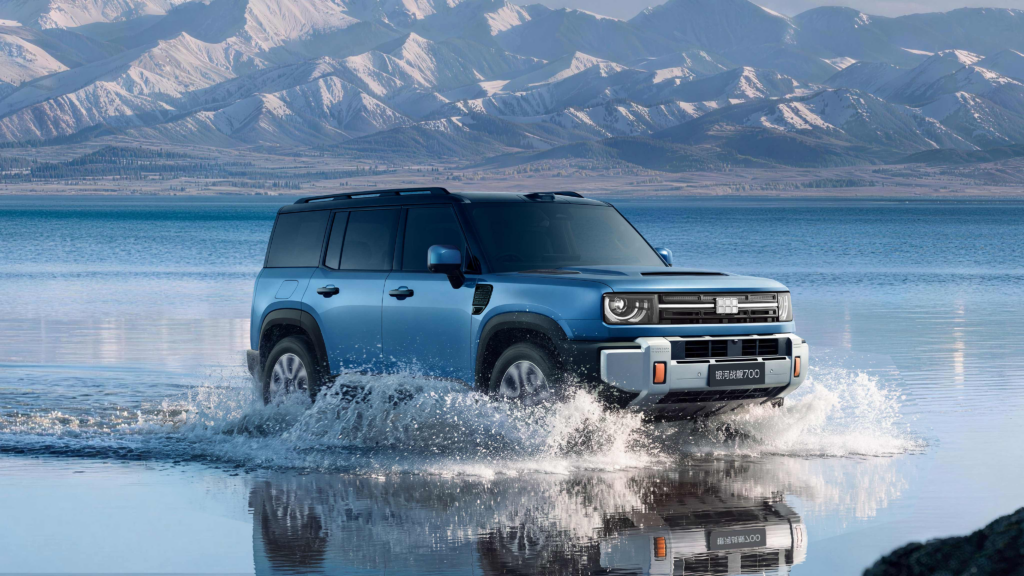
At altitudes above 4,000 meters, the 2.0T combustion engine suffers reduced intake efficiency. Under the EM-T system, electric motors supplement power output instantly. When climbing steep mountain passes or overtaking, the engine generates electricity while motors deliver torque. There is no obvious power fade common to fuel-only off-road vehicles during long uphill climbs, even when the battery is depleted.
Highland environments also feature large day-night temperature swings and strong UV radiation. The CATL battery pack is equipped with a precise thermal management system. It preheats the battery on cold mornings and activates active cooling under intense daytime sunlight to keep the battery within optimal operating temperature and minimize performance fluctuations.
Satellite communication becomes invaluable in remote highland zones with no cellular coverage. It transmits position and distress messages in case of vehicle breakdown or medical emergencies.
Realistically, thin air reduces the engine’s power generation efficiency at high altitude. Fuel consumption in charge-depleting mode will be slightly higher than on plains. Drivers should set reasonable battery preservation strategies and reserve adequate state of charge before sustained uphill climbing to maximize vehicle performance.
Conclusion: A New Energy Hardcore Off-roader Built for Overlanding
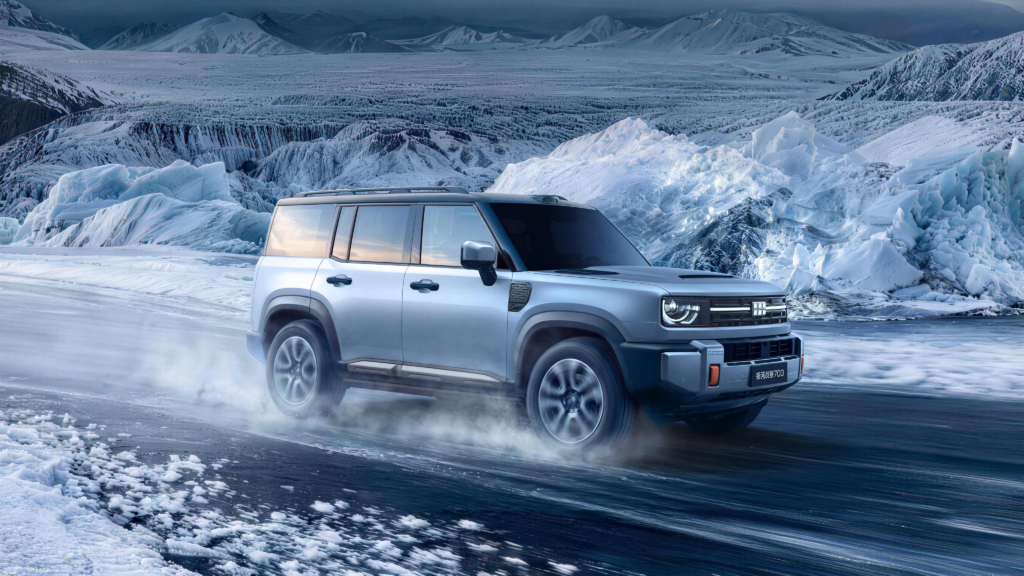
The Galaxy Cruiser 700 is not a purpose-built race vehicle for professional off-road competitions. It is positioned as an all-terrain SUV balancing family long-distance travel and overlanding. The GTA integrated body-on-frame design delivers high body rigidity. The EM-T three-motor hybrid system balances driving range and power output. Air suspension, intelligent terrain control, satellite communication and emergency flotation are all optimized for overlanding scenarios including plateaus, Gobi, deserts and river crossings.
Its strengths are clear: quiet and economical long-distance cruising, rigid body structure, responsive torque in sand, far less power degradation than traditional fuel off-roaders on plateaus, and higher safety margin during water crossings. Still, it follows the physical limits of off-roading. Electronic aids are only assistance. Terrain judgment, proper driving technique and route planning remain the top priority for safe overlanding.
For overlanders who frequently take cross-continental trips and need a daily usable vehicle capable of desert, highland and river-crossing expeditions, the Geely Galaxy Cruiser 700 offers a fresh solution in the new energy hardcore off-road segment.