
Suppose you’ve secured a deal with a key African client for 100 Chery Tiggo 8 Pros—an order worth millions. Your freight forwarder will ask: Ro-Ro or container shipping?
Even familiar with these terms, you may hesitate about their differences in cost, transit time and safety.
There’s no one-size-fits-all answer: a wise choice saves freight costs, while a poor one erodes profits via excessive shipping fees and damage.
This article uses market data and case studies to help you make an informed decision.
Part 1: Core Definitions – The Fundamental Differences Between Ro-Ro and Container Shipping
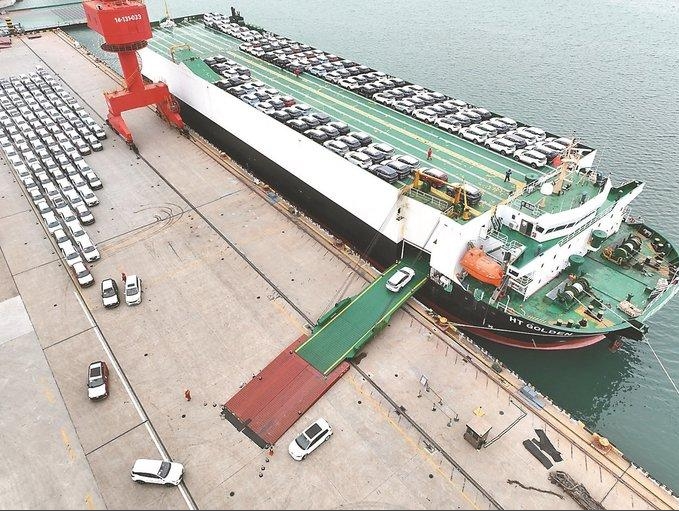
1.1 Ro-Ro (Roll-on/Roll-off): Vehicles Drive Directly Onto the Vessel
Finished vehicles are driven directly onto the ship and stowed, similar to a multi-story parking lot.
Advantages
- Efficient loading/unloading: Hundreds of vehicles processed within one hour
- No packaging damage: Eliminates container packing and lashing
- Cost-effective for bulk (50+ units): Clear per-unit advantage
- Specialized for passenger vehicles/SUVs: Primary choice for automotive exports
Disadvantages
- Cargo restriction: Only finished vehicles; spare parts need separate shipment
- Port limits: Not all African ports have Ro-Ro terminals
- Open-deck risks: Vehicles exposed to sea spray, sun and rain during one-month transit
1.2 Container Shipping: Vehicles Stowed in Containers for Vessel Transport
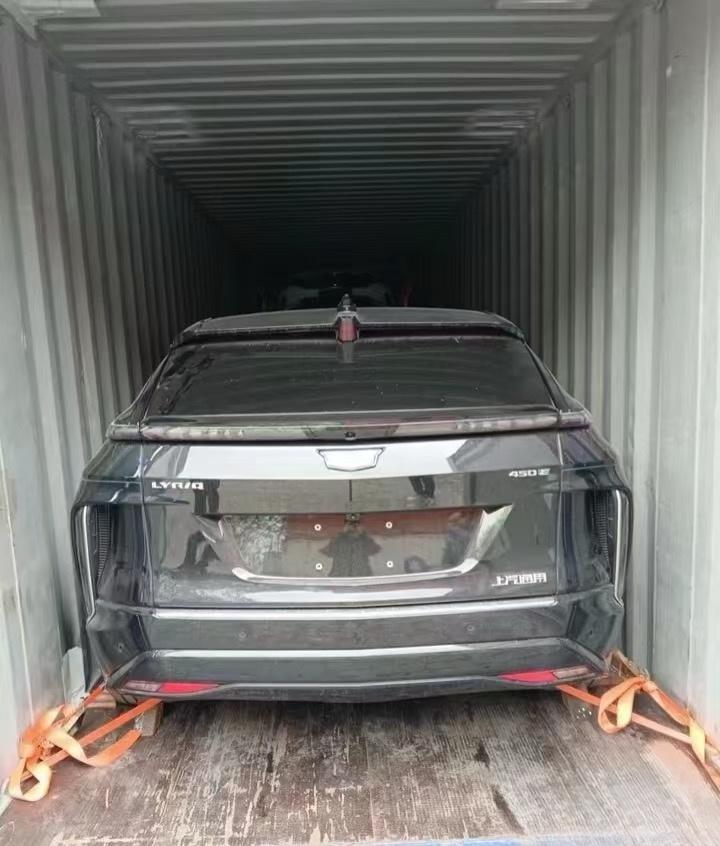
Vehicles are loaded into standard containers (a 40ft HQ fits 2–4 units), secured, then shipped via container vessels.
Advantages
- Superior protection: Enclosed containers shield from salt spray, scratches and impacts
- Multi-cargo compatible: Spare parts stowed with vehicles in one container
- Wide port coverage: Accessible to all container terminals
- Frequent sailings: More departures than Ro-Ro vessels
Disadvantages
- Time-consuming packing: Half a day per container for professionals
- Higher per-unit costs: 20%–30% more than Ro-Ro (including packing fees)
- Increased handling risks: Extra packing/unpacking raises damage potential
1.3 In a Nutshell
Ro-Ro ships vehicles directly; container shipping requires vehicles to first be loaded into containers.
Part 2: Quantitative Analysis – Cost Comparison for 100 Vehicles Shipped to Africa
2.1 Basic Assumptions
Typical export scenario for accuracy:
- Destination: Apapa Port, Lagos, Nigeria
- Cargo: Chery Tiggo 8 Pro (top export model)
- Quantity: 100 units
- Unit Value: $16,500; Total: $1.65 million
2.2 Per-Unit Freight Cost Comparison (2026 Market Rates)
| Shipping Method | China-West Africa | China-East Africa | Notes |
| Ro-Ro | $1,800–$2,200/unit | $2,200–$2,600/unit | Negotiable for bulk |
| Container | $2,500–$3,000/unit | $3,000–$3,500/unit | Includes packing/lashing |
Ro-Ro saves $500–$800/unit ($50k–$80k for 100 units), but hidden costs must be considered.
2.3 Hidden Cost Comparison
| Cost Item | Ro-Ro | Container | Winner |
| Packing Fee | $0/unit | $100–$150/unit | Ro-Ro |
| Destination Unloading Fee | Included | $50–$100/unit (select ports) | Port-dependent |
| Salt Spray Damage Risk | High (open-deck) | Fully protected | Container |
| Scratch/Theft Risk | Possible | Low (proper lashing) | Container |
| Demurrage Risk | Higher (fewer sailings) | Lower (flexible scheduling) | Container |
| Insurance Premium | Higher (0.5%–1% damage) | Lower (<0.1% damage) | Container |
2.4 Cost of Capital – The Most Overlooked Factor
Exporters often overlook capital tied up in transit. Analysis (1% monthly interest):
- Ro-Ro: 45–60-day transit → Capital cost: $24,750–$33,000
- Container: 30–40-day transit → Capital cost: $16,500–$21,450
Container saves ~$8,250–$11,550 in capital costs.
2.5 The Full Cost Picture – Net Difference
| Item | Ro-Ro | Container | Net Difference |
| Base Freight (100 units) | $200,000 | $280,000 | Ro-Ro saves $80,000 |
| Packing Fee (100 units) | $0 | $15,000 | Ro-Ro saves $15,000 |
| Capital Cost (average) | $28,875 | $18,975 | Ro-Ro +$9,900 |
| Estimated Damage Cost | $13,750 | $4,125 | Ro-Ro +$9,625 |
| Total Cost | $242,625 | $318,100 | Ro-Ro saves $75,475 |
Key Conclusion: Ro-Ro’s net savings are ~$75,475 (down from $80k direct savings). Note: If the destination lacks Ro-Ro terminals, container is the only option.
Part 3: Scenario-Based Decision Making – When to Choose Ro-Ro vs. Container
3.1 Choose Ro-Ro When
✅ Bulk single-model (50+ units, cost advantage evident)
✅ Destination has Ro-Ro terminal (e.g., Lagos, Tema, Durban, Mombasa)
✅ Standard passenger vehicles/SUVs (pickups may exceed limits)
✅ Transit time/capital cost not critical
✅ Rugged vehicles (minor scratches irrelevant)
3.2 Choose Container When
✅ Small/mixed-model shipments
✅ Destination has no Ro-Ro terminal
✅ Spare parts shipped with vehicles
✅ High-value/delicate vehicles (luxury, nearly-new, white-painted)
✅ Time-sensitive orders
✅ NEVs (many Ro-Ro vessels decline them)
Part 4: Real-World Case Studies
Case 1: 100 Chery Tiggo 8 Pros to Lagos
- Method: Ro-Ro (bulk + Ro-Ro terminal)
- Result: $80k freight savings, but $5k roof seal repairs (rainy season open-deck exposure)
- Lesson: Avoid Ro-Ro in rainy season, or pay 20% for below-deck stowage.
Case 2: 50 Mixed Units to Tema
- Method: Container (mixed models + spare parts)
- Result: Higher freight, but spare part sales offset costs and added profit.
- Takeaway: Container enables dual shipment of vehicles and parts.
Case 3: 30 Luxury Vehicles to Mombasa
- Method: Container (high-value protection)
- Result: Pristine arrival, buyers paid premium, boosting margins.
- Takeaway: Luxury vehicles need container shipping; Ro-Ro for rugged models.
Part 5: Practical Decision-Making Toolkit
5.1 5 Critical Questions
- Volume? <20 units → Container; 20–50 → Compare both; >50 → Ro-Ro
- Vehicle type? Luxury/white-painted → Container; rugged → Ro-Ro
- Destination port? No, Ro-Ro → Container; has Ro-Ro → Compare both
- Time-sensitive? Yes → Container; No → Ro-Ro
- Spare parts with vehicles? Yes → Container; No → Ro-Ro
5.2 Ro-Ro Pitfall Checklist
- Avoid open-deck in rainy season; buy comprehensive insurance
- Ensure complete documents; inspect vehicles on arrival
- Confirm vessel height/width limits in advance
5.3 Container Pitfall Checklist
- Use professional packers; adhere to stowage limits (3 mid-size SUVs/40ft HQ)
- Use desiccants; secure lashing (industrial straps, wheel chocks)
- Label mixed shipments clearly
Part 6: Future Trends
6.1 Ro-Ro: Tight Capacity Short-Term, Relief Post-2026
2024–2025 Ro-Ro capacity shortages doubled rates (drivers: Chinese auto export growth, old vessel phase-out, new vessel lead time 2–3 years).
Outlook: Capacity will ease post-2026, rates stabilize.
6.2 Container: Oversupply, Falling Rates
2025 container oversupply lowered rates, benefiting small-volume exporters (flexible, frequent sailings).
6.3 NEVs: Container as Primary Option
Many Ro-Ro vessels decline NEVs; containers are safer (comply with IMDG Code).
Final Conclusion: No “Best” Method, Only the “Right” One
Key: Calculate total comprehensive cost, align with your scenario (time, risk, opportunity, client needs).
Three Tips for New Exporters
- First cooperation/high-value → Container (protects brand, ensures safety)
- Repeat bulk/Ro-Ro ports → Ro-Ro (saves on costs)
- Prioritize a reliable freight forwarder for optimal solutions.