
Why is the Tiggo 8 Pro considered China’s miracle car in the African market?
If you go to Lagos, Nigeria, and randomly count 10 Chinese cars on the street, at least 3 of them will be Tiggo 8 Pros.
That’s no exaggeration. LagRide—one of Lagos’ largest ride-hailing platforms—procured 300 Tiggo 8 Pro units last year as its primary fleet. In Kenya, middle-class families in Nairobi see it as their go-to 7-seater, while in Ghana, small business owners use it for both cargo and passengers—one vehicle, two purposes.
But here’s the kicker: In China, this car is just a budget-friendly family SUV with no prestige to speak of. So why has it become a “hard currency” in Africa?
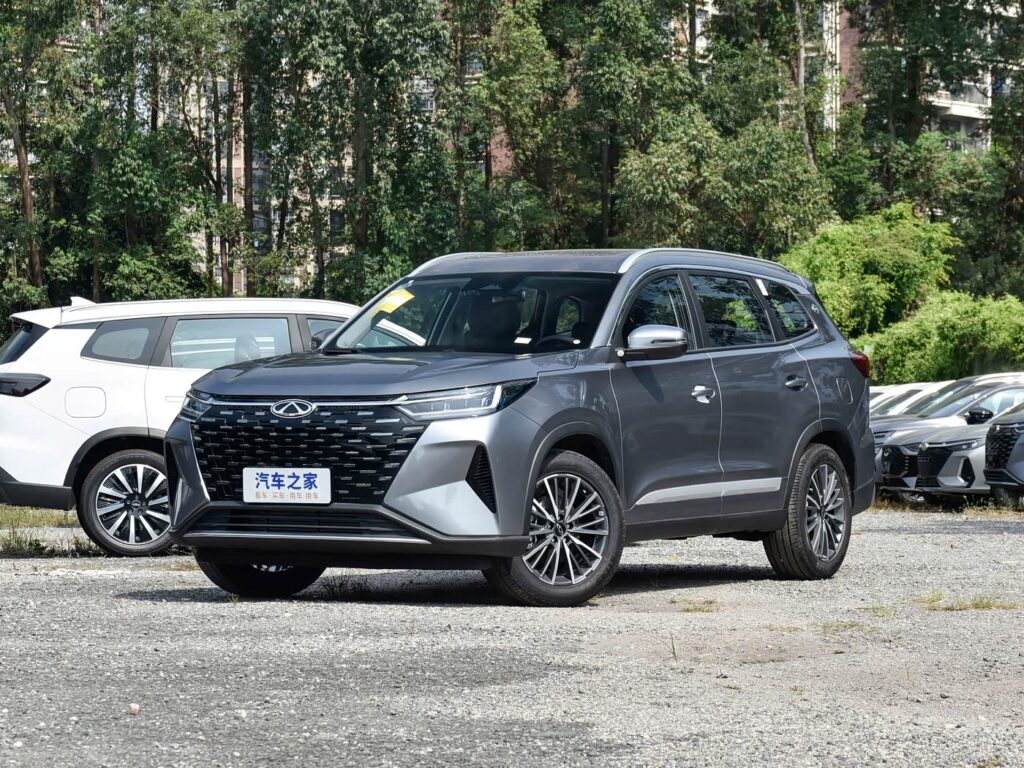
Part 1: Why is the Roewe 8 Pro so popular in Africa?
1.1 Market positioning: An affordable alternative to the Toyota RAV4—and far more than that
In Africa, the dominance of Japanese used cars is beyond question. But the Tiggo 8 Pro has found a precise entry point:
| Comparison criteria | Chery Tiggo 8 Pro (used) | Toyota RAV4 (used, same age) |
|---|---|---|
| Price | 40% cheaper | – |
| Configuration | Dual-screen infotainment, 360° panoramic camera, electronic parking brake (EPB) | Most basic trims still use manual air conditioning |
| Seating | 7-seat option available | Primarily 5-seat layout |
| Vehicle age | Typically 1–3 years old | Commonly 5–8 years old |
| Like-new condition | Yes (original factory paint, no obvious wear) | No (clear signs of prior ownership) |
Conclusion: The Chery Tiggo 8 Pro isn’t just an affordable option—it’s about delivering a Camry-like driving experience for the price of a Corolla.
1.2 Core Market Performance
| Country | Role | Reason for popularity |
|---|---|---|
| Nigeria | Primary ride-hailing fleet vehicles | Low cost, durable, and supported by a well-established local spare parts network |
| Kenya | Top choice for family vehicles | 7-seater with premium features, at 50% the price of new Japanese models |
| Ghana | All-purpose workhorse for small businesses | Capable of carrying both passengers and cargo, with outstanding cost-effectiveness |
| South Africa | Choice for middle-class families to embrace innovation | Hybrid variants are incentivized by local environmental policies |
One-sentence recommendation: Unless the customer explicitly requests the 2.0T, push the 1.6T—the tax savings are your profit margin.
2.2 Seating Layout: 5-Seater vs. 7-Seater
In Africa, 7 seats aren’t an option—they’re a necessity.
- Family trips: Carry the whole family in one vehicle. You might not always need the third row, but you can’t do without it.
- Ride-hailing: More passengers, more fares. Two extra seats mean two extra fares.
- Church/gatherings: Africans have active social lives, and a 7-seater is social capital.
Data speaks: In the Nigerian market, 7-seater versions turn over 30% faster than 5-seaters, with a 5%-8% price premium.
Who are 5-seaters for? Small business owners hauling cargo (fold the rear seats for massive space) and young couples. But overall, prioritize 7-seaters.
2.3 Transmission: Automatic vs. Manual
- Automatic: In gridlocked cities like Lagos and Nairobi, automatic is non-negotiable and commands a premium.
- Manual: Suited for smaller cities, experienced drivers, and budget-conscious buyers.
Advice: If your budget allows, prioritize automatics—they appeal to a wider market and deliver higher profits. An automatic version can sell for ¥5,000 more than the same model with a manual transmission.
2.4 Trim Levels: Base Models Suffice, High-End Trims Sell
| Configuration | Domestic equivalent | Overseas acceptance | Premium margin |
|---|---|---|---|
| Low trim | Premium Edition | Bulk purchase by ride-hailing companies | – |
| Mid trim | Premium Edition | Preferred by family users | +5%–8% |
| High trim | Flagship Edition | High-end personal clients & business reception | +10%–15% |
Special Notes:
- Sunroof: Not a necessity in Africa—too hot, rarely used. But if the high-end trim comes with one, you can use it as a selling point.
- Large Screen: African buyers love anything that looks expensive. The dual-screen setup is the Tiggo 8 Pro’s killer feature.
- Wheels 18 inches or larger: Be cautious. Africa’s rough roads cause frequent blowouts. The cost of replacing one all-terrain tire is equivalent to two tanks of fuel.
- White Interior: Avoid. Africa is dusty; a white interior turns gray in six months and loses value in the second-hand market.
Part 3: Frequently Asked Questions You Must Know Before Exporting
3.1 Quality Issues — Real Feedback vs. Stereotypes
The three most common questions from African dealers:
Q1: Is the Tiggo 8 Pro rugged? I’ve heard Chinese cars break down easily.
Truth: Early exports of the Tiggo 8 did have issues—mainly shocks that were too soft and short battery life. But from the 2023 model onward, significant improvements were made: the chassis was reinforced, and the battery was upgraded to a higher-capacity model.
Local Feedback: With regular maintenance, it runs reliably for 5-8 years.
Data: Among 100 Tiggo 8 Pro units operated by the LagRide fleet for one year, the failure rate was approximately 8% , mainly involving wear parts (brake pads, tires). There have been no cases of major overhauls to core components like the engine or transmission.
Q2: Is the air conditioning cold enough? Can it handle 40°C heat in Africa?
Truth: The Tiggo 8 Pro’s A/C system has been optimized for tropical regions, and its cooling performance has earned a solid reputation locally.
Real-world test: At noon in Lagos (40°C), set the cabin to 22°C, and the entire car cools down completely in 10 minutes.
The catch: Airflow from the rear vents is weak, and the third row barely gets any breeze.
Solution: Install a small fan, or just accept it—after all, the third row is usually for kids.
Q3: Are spare parts easy to get? Who do I go to for repairs?
Current situation:
- Chery has a parts distribution center in Lagos, Nigeria, with common parts like filters, brake pads, shock absorbers, and bulbs in stock.
- Ghana and Kenya have authorized dealers where parts can be ordered.
Pain point: Exterior parts (headlights, bumpers, side mirrors) need to be ordered and take about 2-4 weeks to arrive from China.
Advice: When placing your first order, it’s a good idea to stock up on some commonly needed wear parts as backup.
3.2 Compliance Issues
Q4: Does the Tiggo 8 Pro meet the age limit requirements of different African countries?
| Country | Age limit | Remarks |
|---|---|---|
| Nigeria | ≤10 years | Vehicles under 3 years old sell best, with significant price discounts for those over 5 years old |
| Ghana | ≤5 years | A tiered emission tax is imposed on vehicles over 5 years old |
| Kenya | ≤8 years | The age limit remains unchanged after right-hand drive conversion |
| South Africa | No specific restrictions | However, the EU used car market is highly competitive, so Chinese vehicles must compete on condition |
| Uganda | ≤8 years | Left-hand drive vehicles require conversion |
Conclusion: Vehicles within 3 years old can access all markets. Those aged 3–5 years can still be sold, but buyers will use the age as a bargaining chip to push prices down.
Q5: What certification documents are required?
- The essential three: Bill of Lading, Commercial Invoice, Packing List
- Third-party inspection report: Mandatory for Nigeria’s SONCAP certification, proving the vehicle has no accident history or water damage
- Certificate of Origin: Used for tariff preferences in some countries (e.g., South Africa)
- VIN history report: Verifies mileage accuracy and confirms no outstanding liens
Summary — Who is the Tiggo 8 Pro for? Who is it not for?
✅ Best Suited For
- Ride-hailing companies / individual drivers: Low cost, durable, easy to repair, faster return on investment
- Families with multiple children: 7-seater necessity, budget-conscious but want that new-car feel
- First-time Chinese car buyers: High market volume, easy parts access, lowest risk
- Small business owners: One vehicle for dual use—hauling goods and passengers
❌ Not Recommended For
- Off-road enthusiasts: This is not a hardcore off-roader—don’t take it dune bashing or rock crawling
- Brand-obsessed buyers: If your client insists on Toyota, don’t push it
- Fuel economy extremists: The hybrid version is better suited, but requires a 30% higher budget
Chery is preparing to introduce the Tiggo 9 to Africa—positioned as a higher-end model with more luxurious features and a steeper price tag. But for the next three years, the Tiggo 8 Pro will remain the undisputed主力 (mainstay) of the African market.
Why? Because what the African market needs most isn’t the “best car”—it’s the “right car” : affordable, hassle-free to maintain, and easy to resell. The Tiggo 8 Pro hits that sweet spot perfectly.
Final advice for buyers: If you’re buying a Chinese car for the first time, starting with the Tiggo 8 Pro is the safest choice. It may not blow you away, but it definitely won’t let you down.